Seed2Store
One Arduino unit that looks after a crop from the seed tray to the grain store.
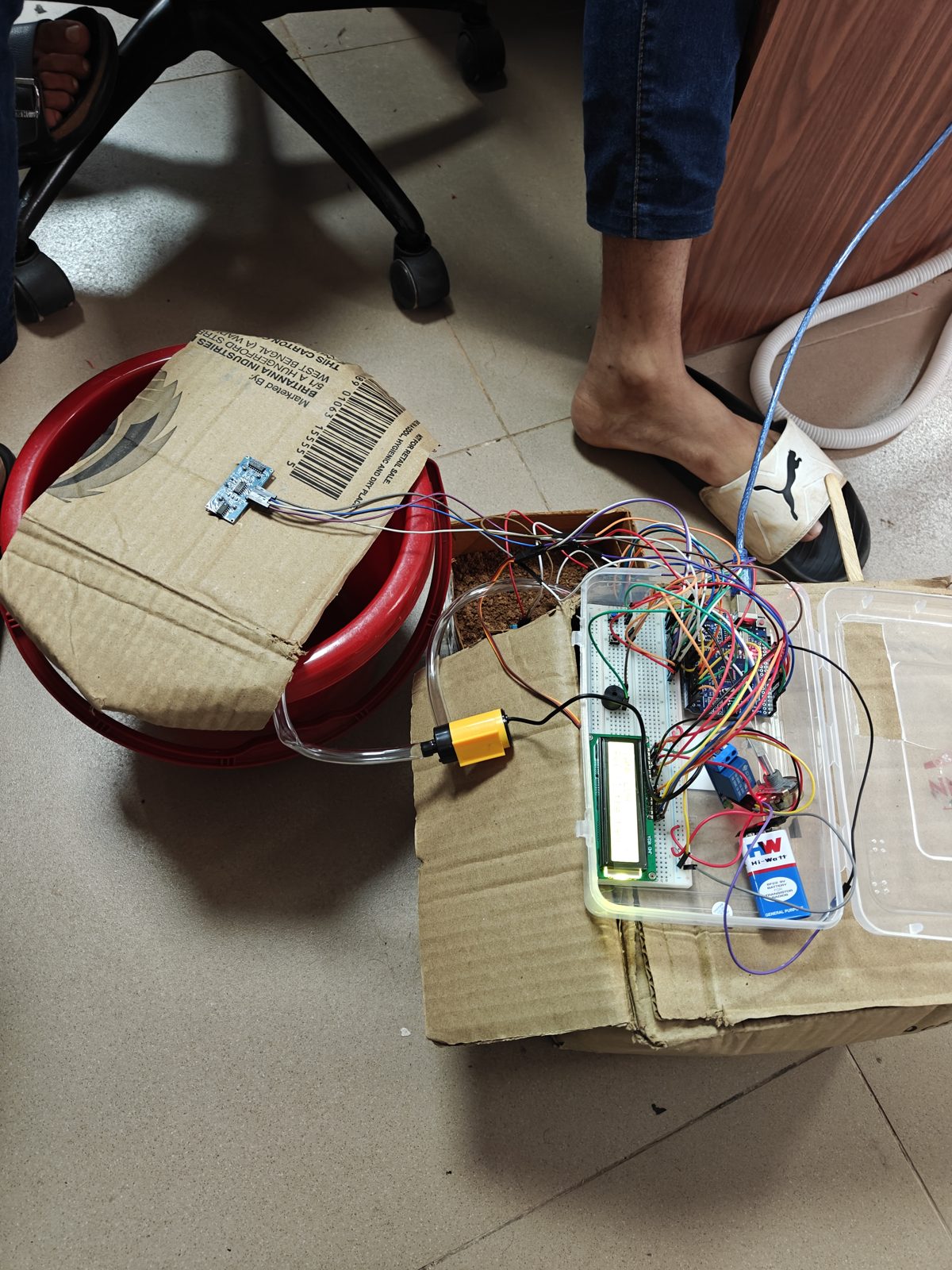
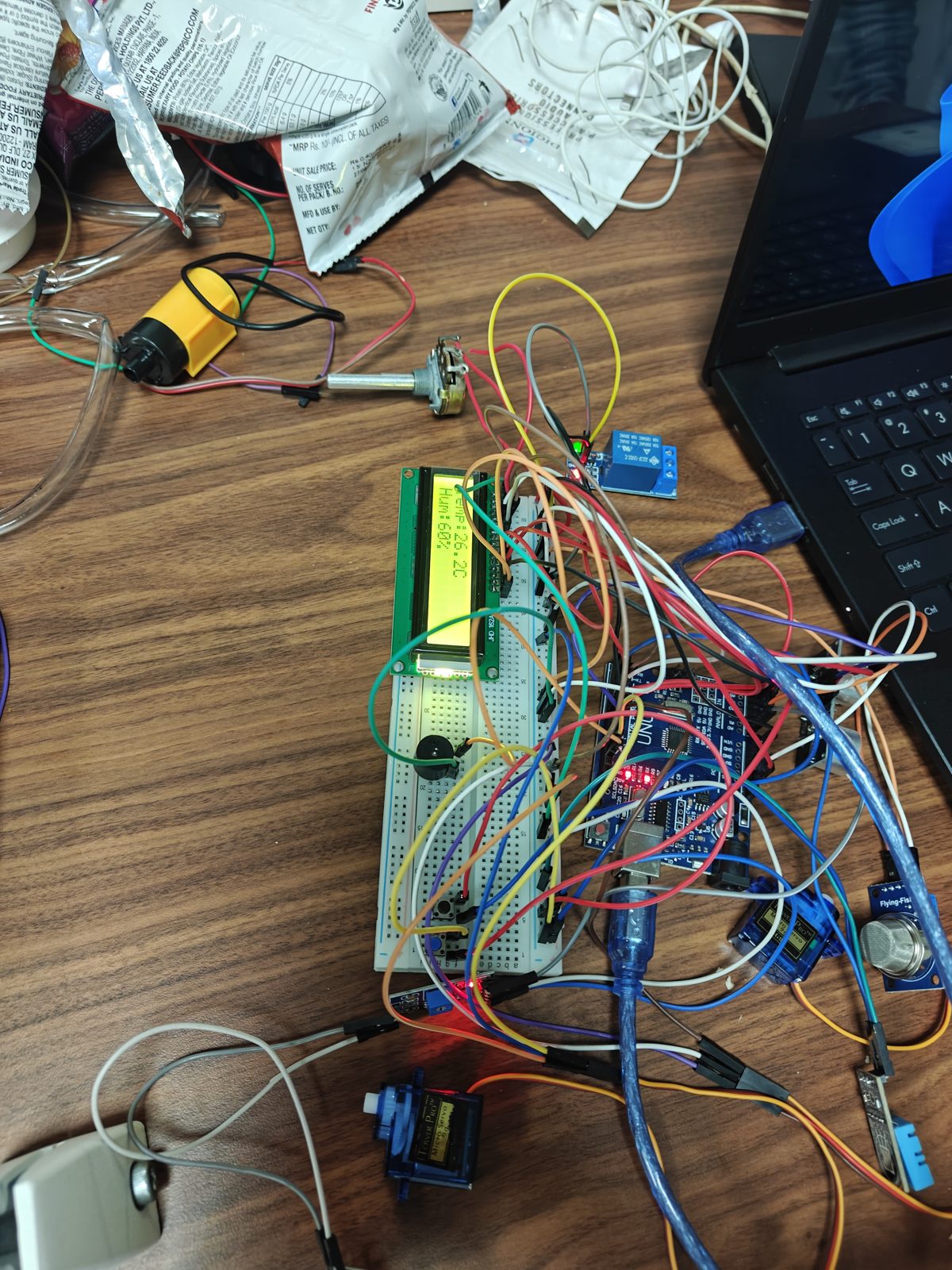
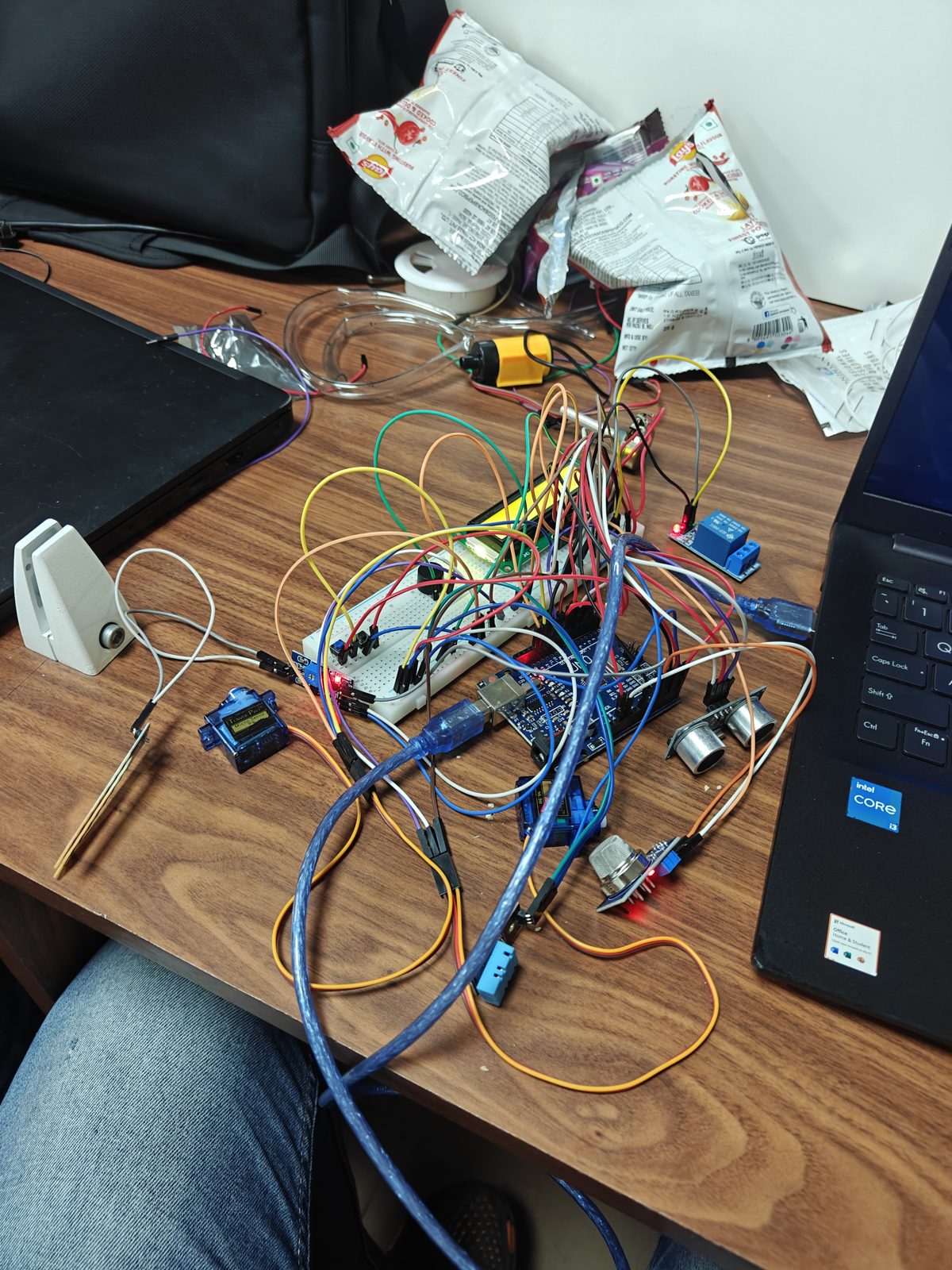
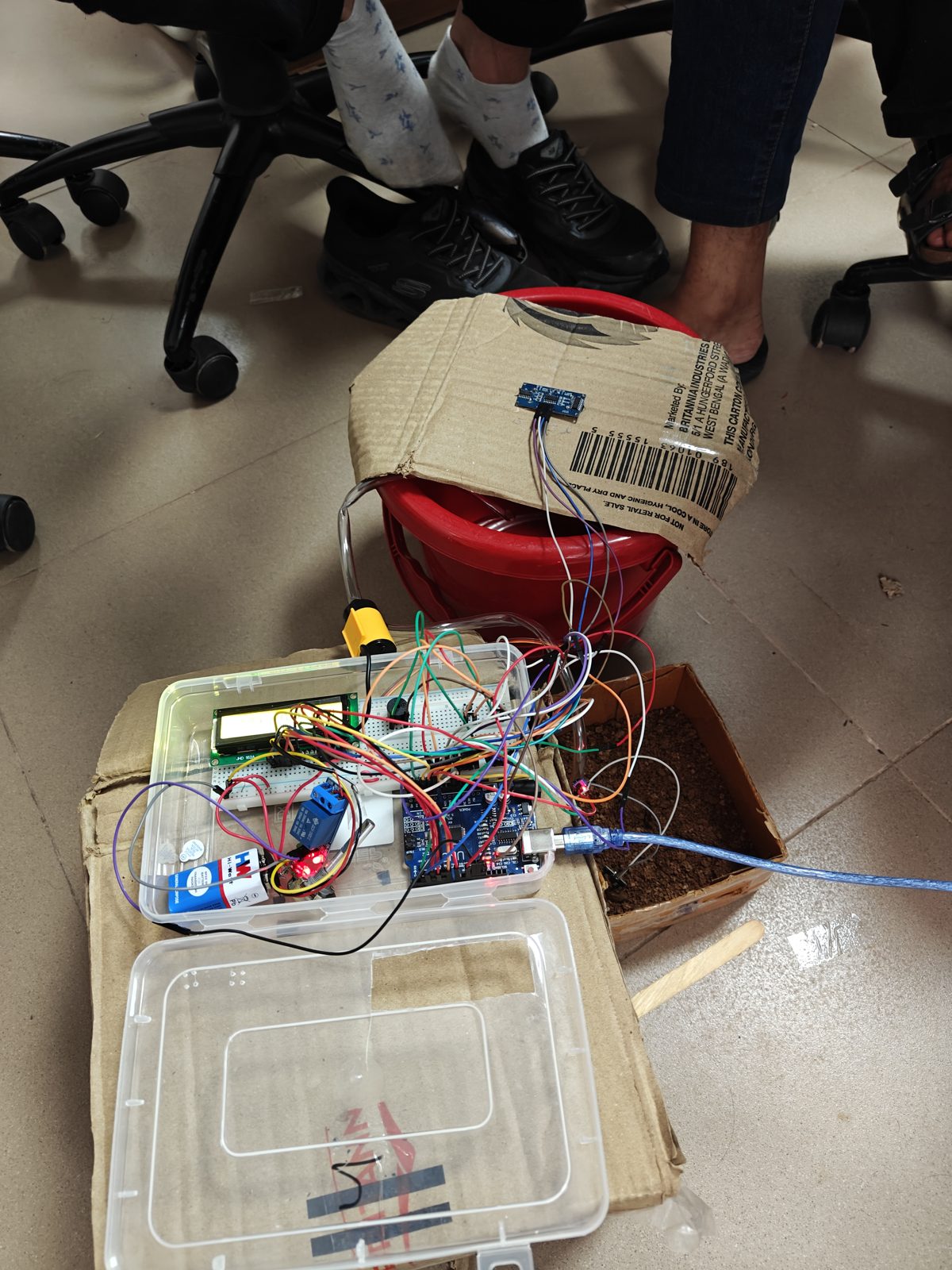
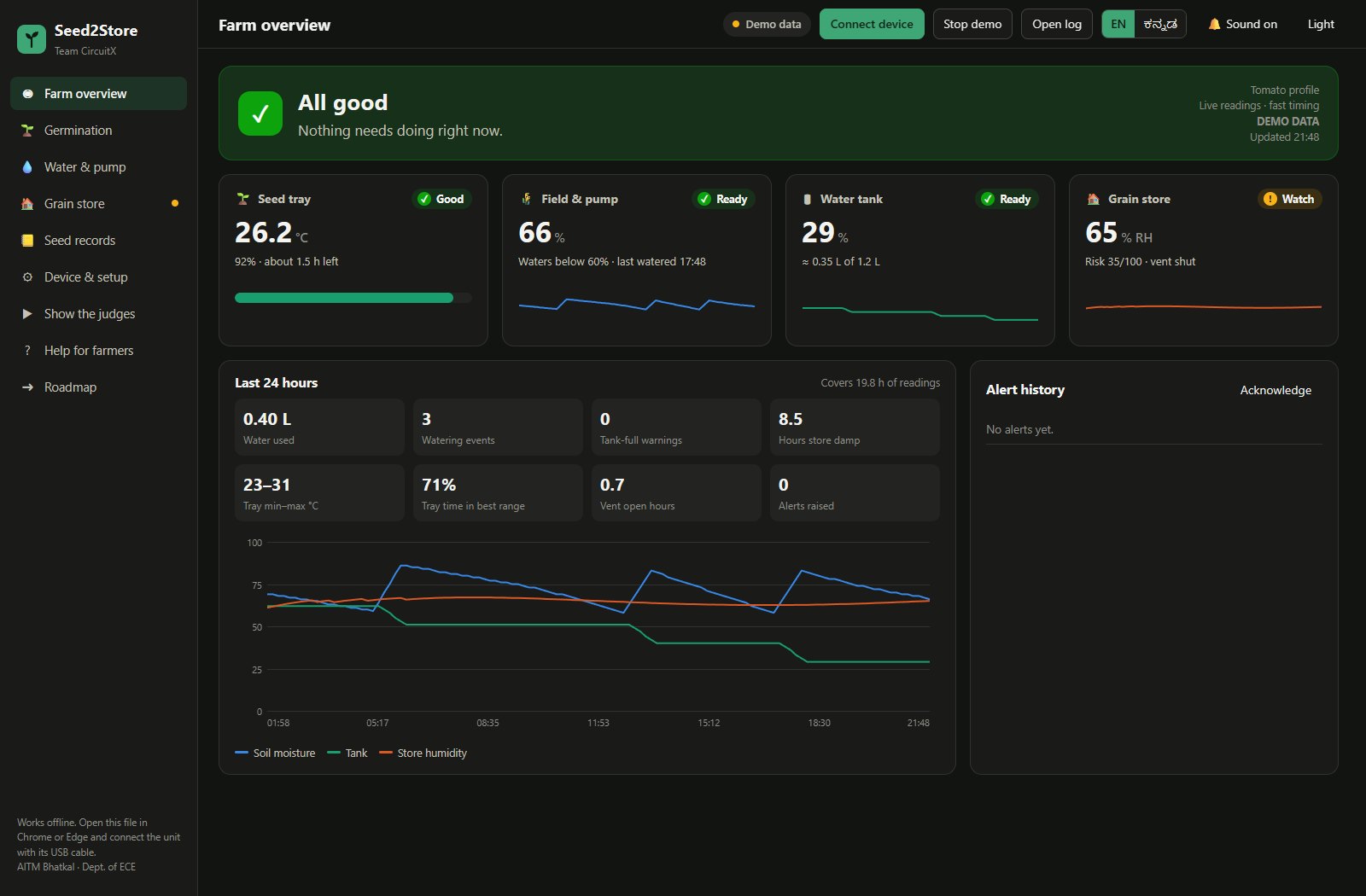
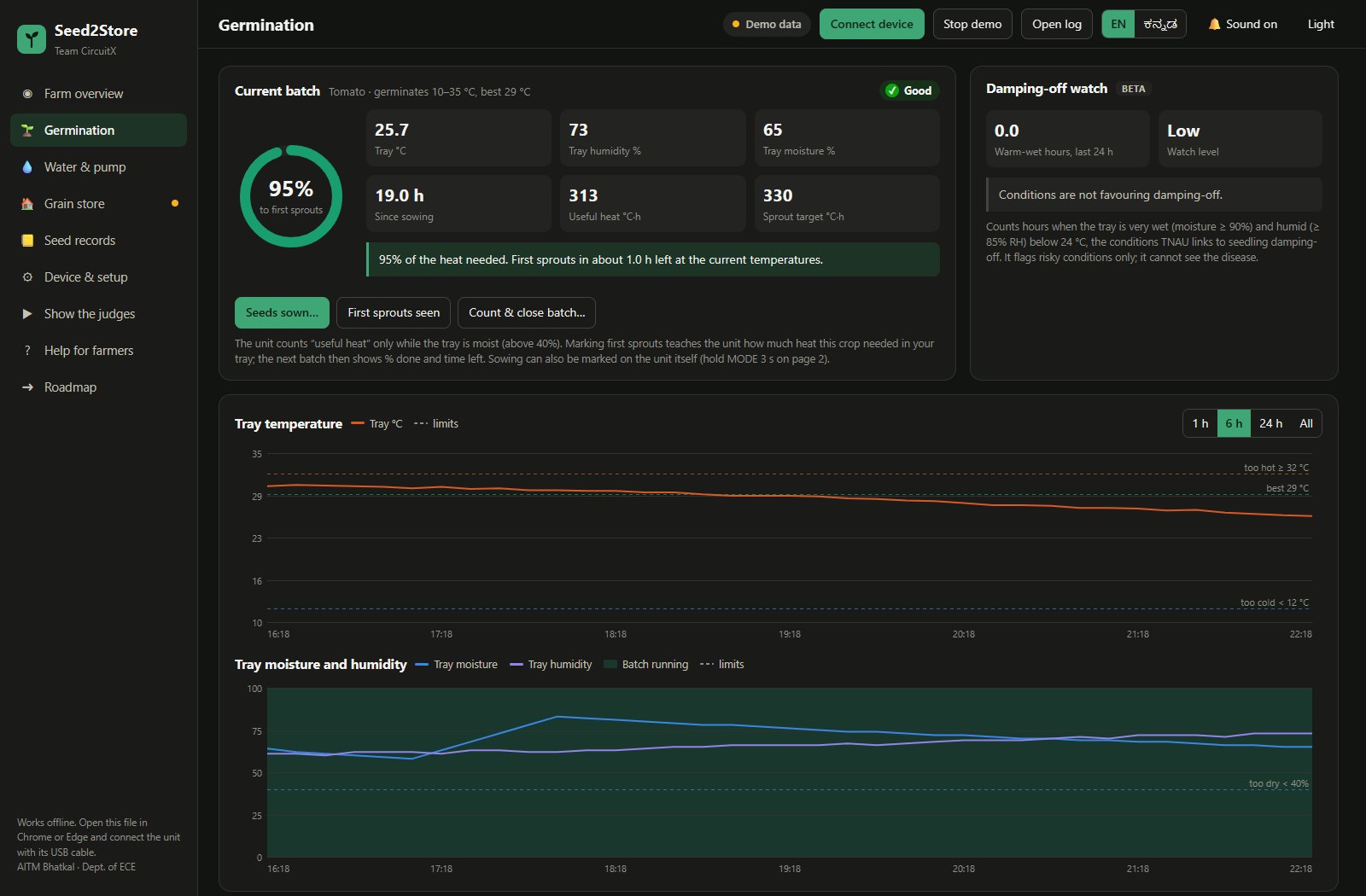
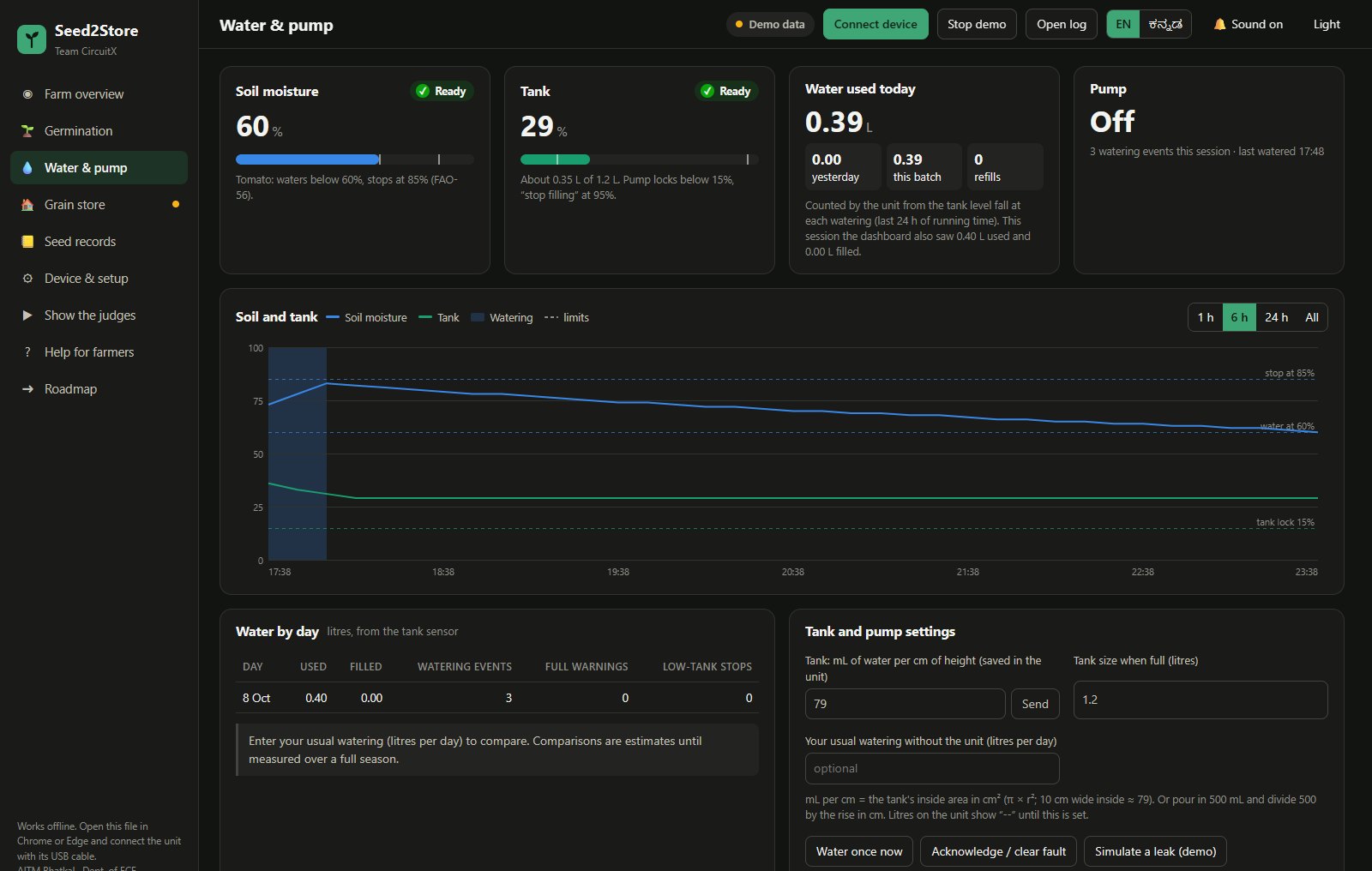
A pump that ran is not proof the plant got water. So after every pulse the unit checks that the tank level fell and the soil got wetter, and locks the pump if either didn't.
Overview
One Arduino Uno unit that covers a crop's three stages, germination, irrigation and storage, with its own LCD, two buttons and a buzzer, and no internet. Built by Team CircuitX at the YEN NOVA 1.0 Build-a-thon; the parts cost about ₹1,500-2,000.
Problem
A small farmer loses seed to poor germination, water to pumps that run blind, and grain to damp storage. The challenge was one Arduino device that looks after all three stages, and works without internet.
System
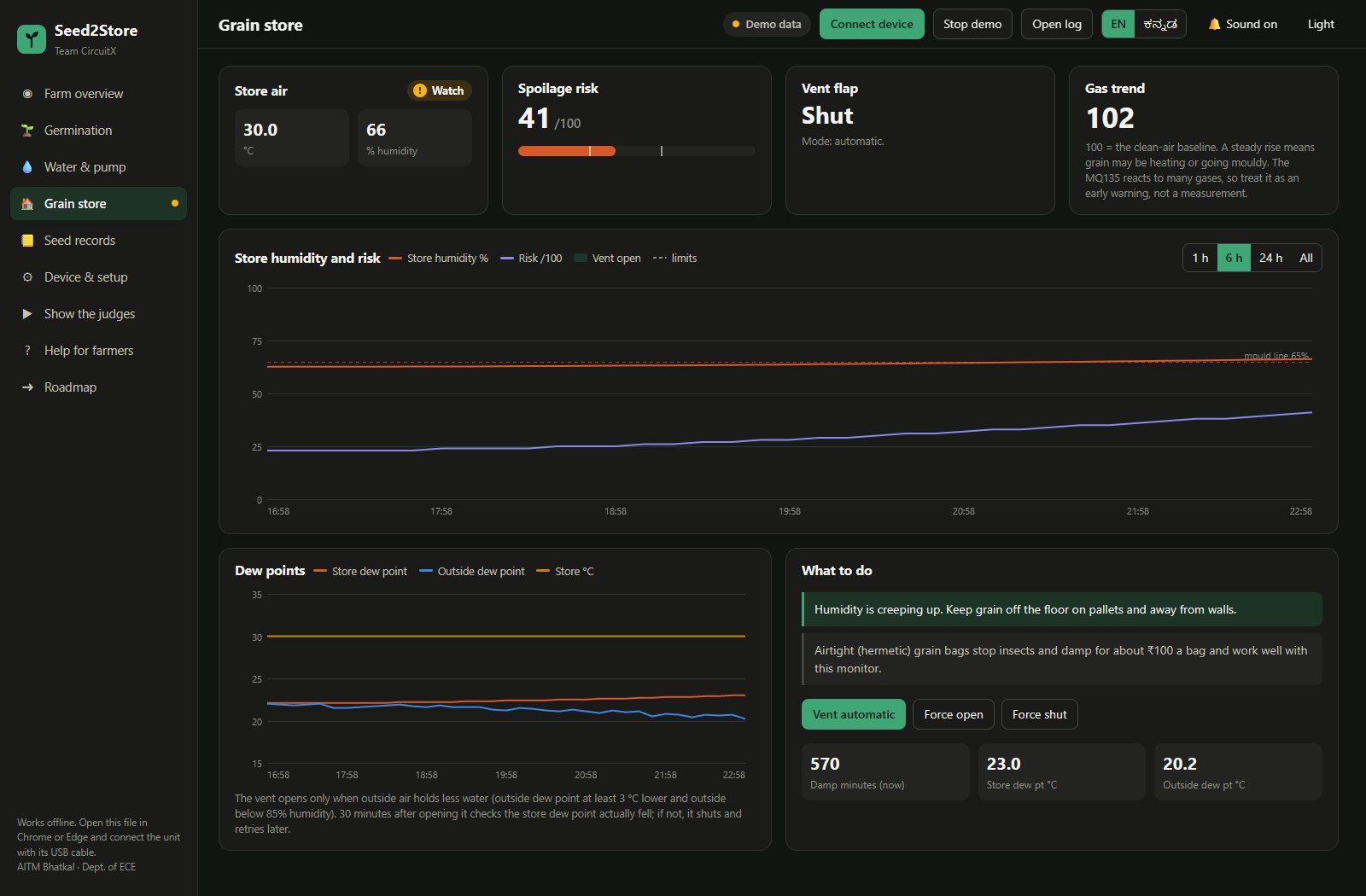
One Arduino Uno with its own LCD, two buttons and a buzzer. In the seed tray it tracks the heat the seeds receive for the chosen crop and keeps a record of every batch. For irrigation it waters in short pulses from a reservoir, then checks that the water arrived. In the grain store it watches humidity, dew point and spoilage gas, and opens a servo vent only when the outside air can dry the store. Fail-safes hold the relay off at boot, cap the pulses and lock the pump after a power dip. Six crop profiles come from published data, and an offline dashboard reads the unit over USB, in English or Kannada.
How it works
- Germination: it tracks the heat the seed tray receives (thermal time) for the chosen crop, warns when the tray is too cold, hot, dry or wet, and keeps a record of every batch with its germination rate against the certified-seed standard.
- Irrigation: it waters in short pulses from a reservoir when the soil is dry, then checks that the tank level fell and the soil got wetter. A blocked hose or a dead pump locks the pump.
- The tank: a low-tank lock, a tank-full state while refilling, a water-loss alarm on a leak, and litres used per day and per batch.
- Storage: it watches humidity, dew point and spoilage gas, opens the servo vent only when the outside air can dry the store, and checks that venting worked.
- Six crop profiles come from published data: Harrington's germination temperatures, FAO-56 and the Indian seed certification standards.
Hardware
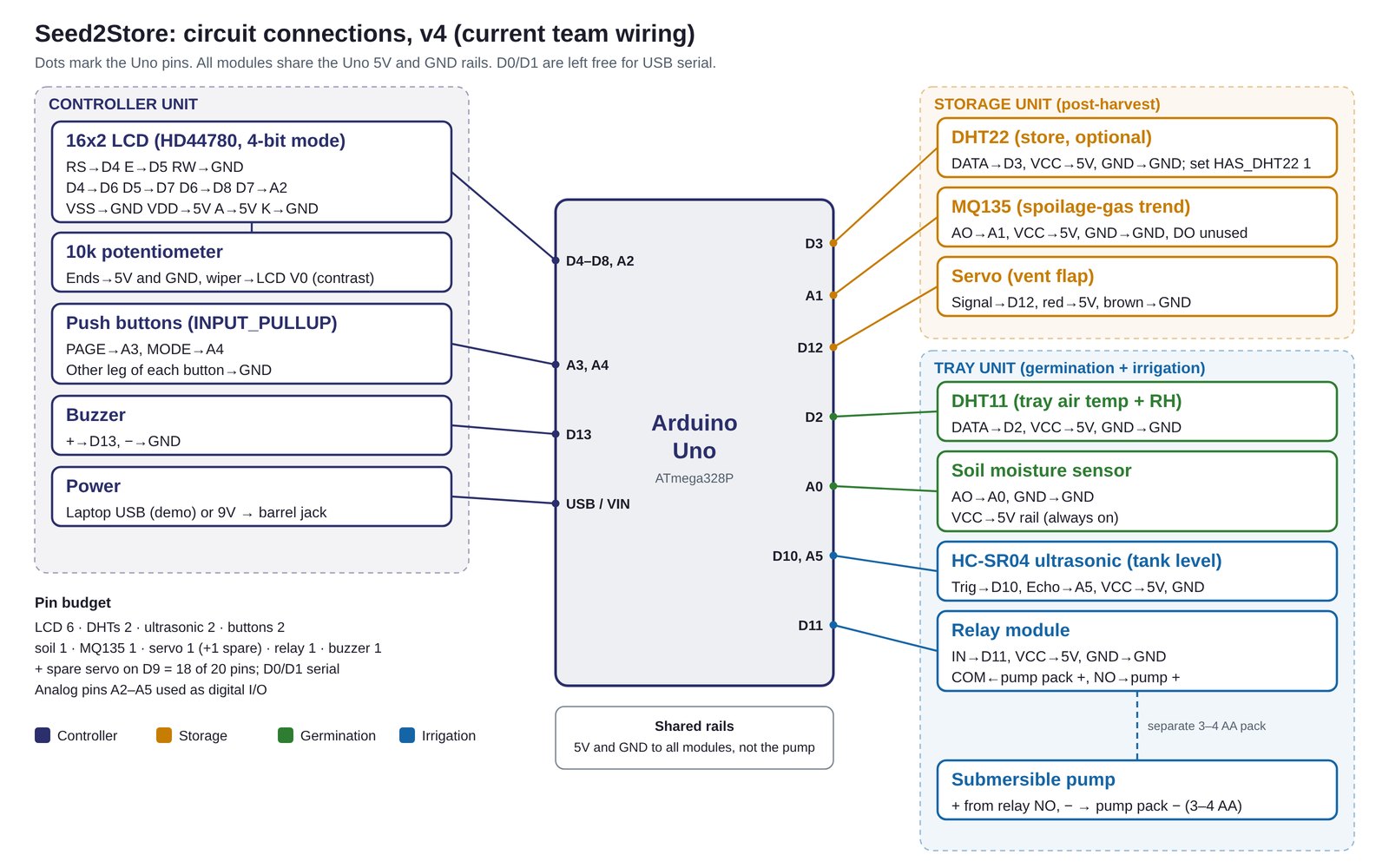
| Part | What it does |
|---|---|
| Arduino Uno | Controller |
| DHT11, optional DHT22 | Tray air; outside and store air |
| Soil moisture sensor | Seed tray moisture |
| HC-SR04 | Reservoir level |
| Relay and mini pump | Irrigation, on its own battery pack |
| SG90 servo | The grain store's vent |
| MQ135 | Spoilage gases |
| 16×2 LCD, buzzer, two buttons | Display, alarms and controls |
Software
- Firmware split into a configuration file (pins, thresholds, timing) and pure calculations, so the logic runs on a PC too.
- The last 15 batches kept in EEPROM; serial commands for status, self-test and calibration at 115200 baud.
- A single-file offline dashboard over Web Serial in Chrome or Edge, in English or Kannada, with a calibration wizard and firmware updates over USB.
- A PC test harness: the real firmware against mock Arduino libraries, inside a simulated tray, tank, pump, store and power supply.
My part
I wrote the firmware and the dashboard, built and wired the unit, and wrote the tests and documentation. Mohammed Faizan, who registered the team, worked alongside me on the hardware and testing.
Challenges
Proving the action happened
A pump that ran isn't proof the water arrived. Each pulse is checked against the tank level and the soil, and venting is checked against the store's humidity.
Fail-safe by default
Relay off at boot, 30 s before it may pump, pulses of at most 2 s and 12 an hour, a low-battery lockout, a lock after a power dip mid-pump, a watchdog, and the pump and servo never together.
Fitting on an Uno
The team build uses 97% of the flash and 42% of the RAM, with no warnings.
Result
Placed 4th at the YEN NOVA 1.0 Build-a-thon at Yenepoya Institute of Technology, a close finish, with a certificate of participation. The firmware passes 56 of 56 tests in a PC simulation with injected faults, and catches 44 of 44 deliberately broken safety guards. Sensor thresholds still need a season of field calibration.
What's next
- A pilot on an ESP32 with the dashboard on the farmer's phone, a capacitive soil probe and a sealed box.
- A season of field calibration for the thresholds, and a native speaker's check of the Kannada text.