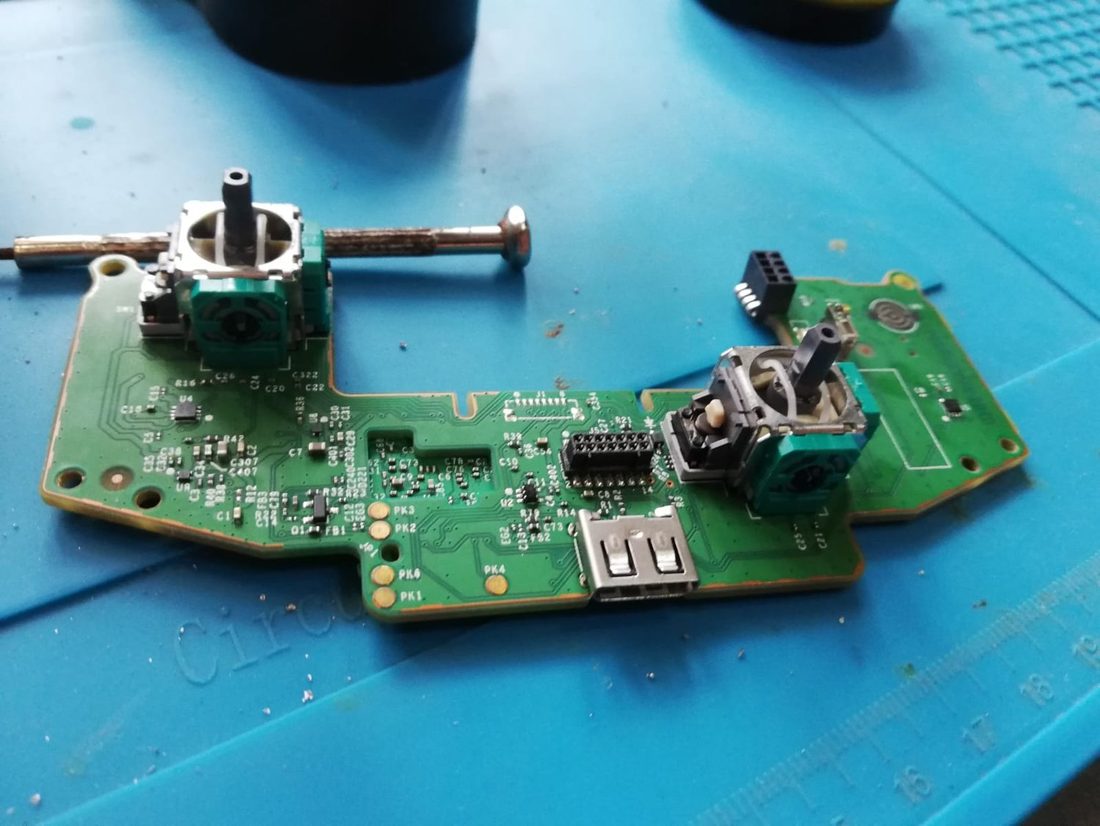
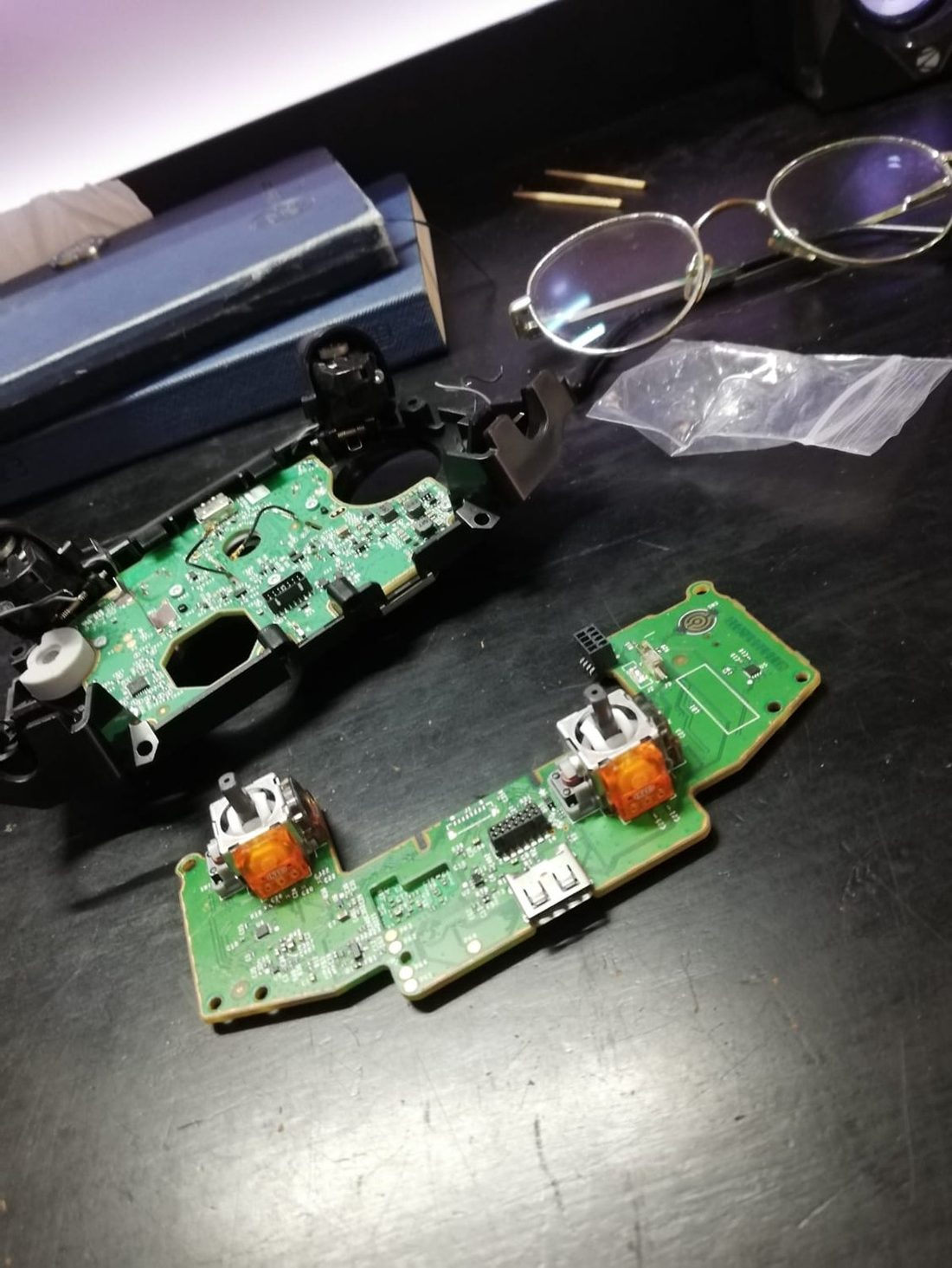
Stick drift is the resistive track wearing. Swapping in the same part just means it drifts again later.
Overview
Board-level diagnosis, rework and thermal service on consumer electronics, plus custom PC builds. Ongoing since 2024, mostly for friends and mostly out of interest: finding a fault in something I didn't design, and fixing it without a schematic.
Problem
The other half of electronics: no schematic, no documentation, and something that used to work and now does not.
System
Board-level fault isolation with a multimeter and oscilloscope, through-hole and surface-mount rework, thermal service, and full PC builds.
How it works
- Xbox Series X controller: drifting sticks from worn potentiometer tracks. I desoldered the stock sticks without lifting pads, fitted TMR modules that sense position magnetically, and checked centring and full travel.
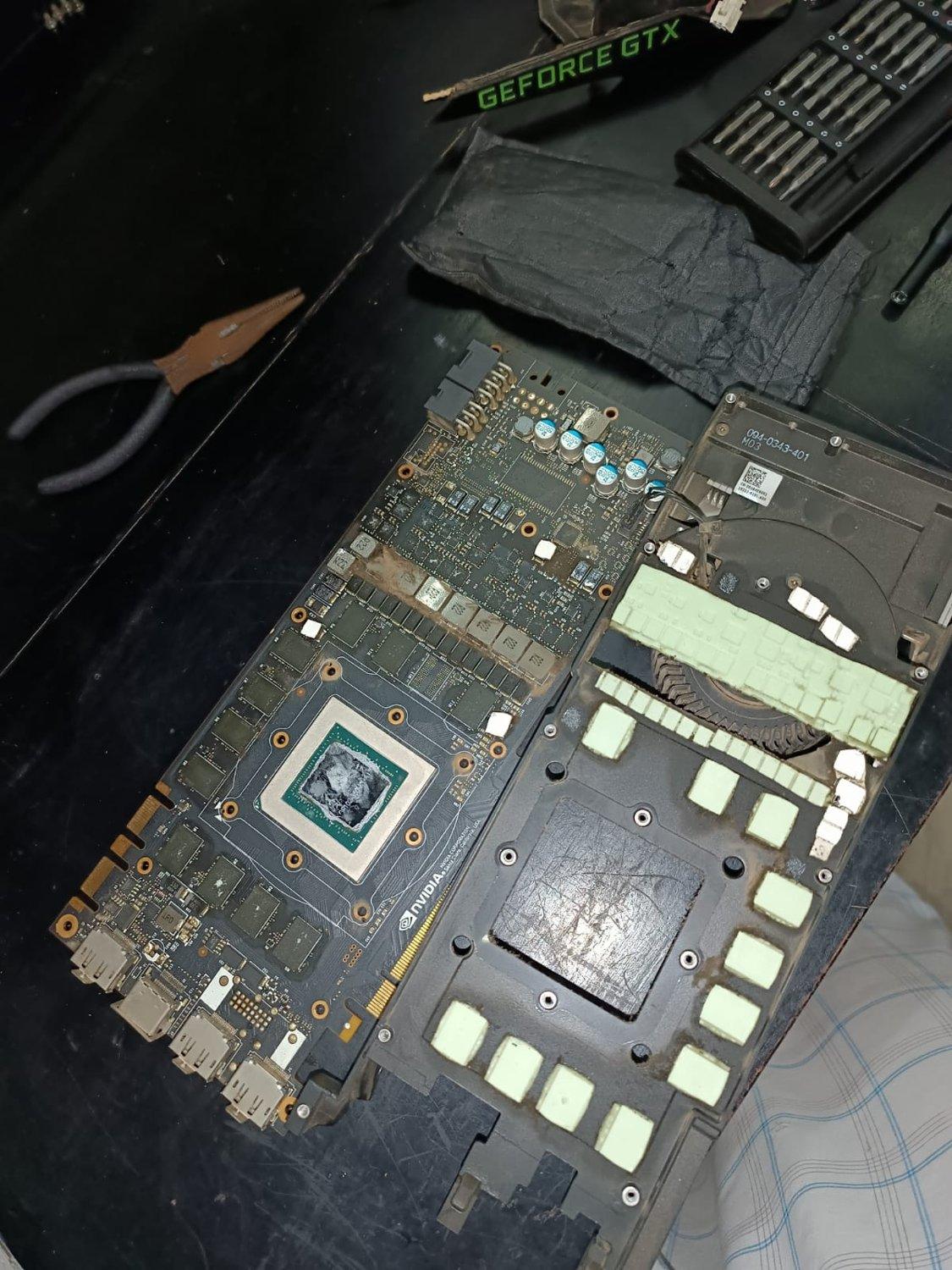
- GTX 1080 Ti: teardown, deep clean, new thermal paste and pads, and a board-level inspection. On a card that age, the VRM and memory pads matter as much as the die.
- A keyboard that had stopped working, diagnosed and brought back.
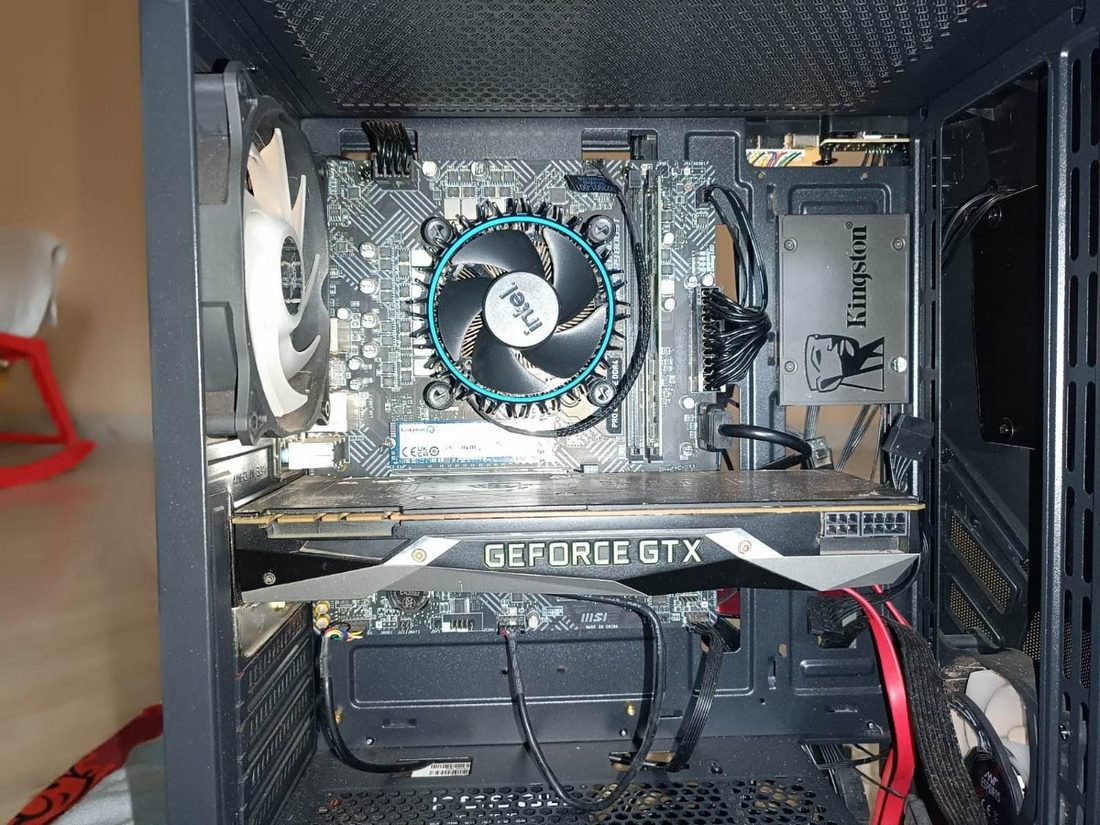
- A custom desktop built from chosen parts and set up with Linux.
Hardware
| Part | What it does |
|---|---|
| Multimeter and oscilloscope | Fault isolation without a schematic |
| Soldering station | Through-hole and surface-mount rework |
| Thermal paste and pads | GPU and CPU service |
My part
All of it. Mostly for friends, out of interest.
Challenges
Fix the cause, not the symptom
Replacing worn sticks with the same part only resets the clock on drift. TMR sensing takes the wear away.
Knowing when to stop
Not every job succeeds. One recent attempt didn't come back: some faults aren't worth recovering, and knowing that is part of the work.
Result
So I fitted TMR modules, which sense the stick position magnetically. Nothing rubs, so there's nothing to wear out.